
THE HUMAN AI FRAMEWORK OF THE FUTURE
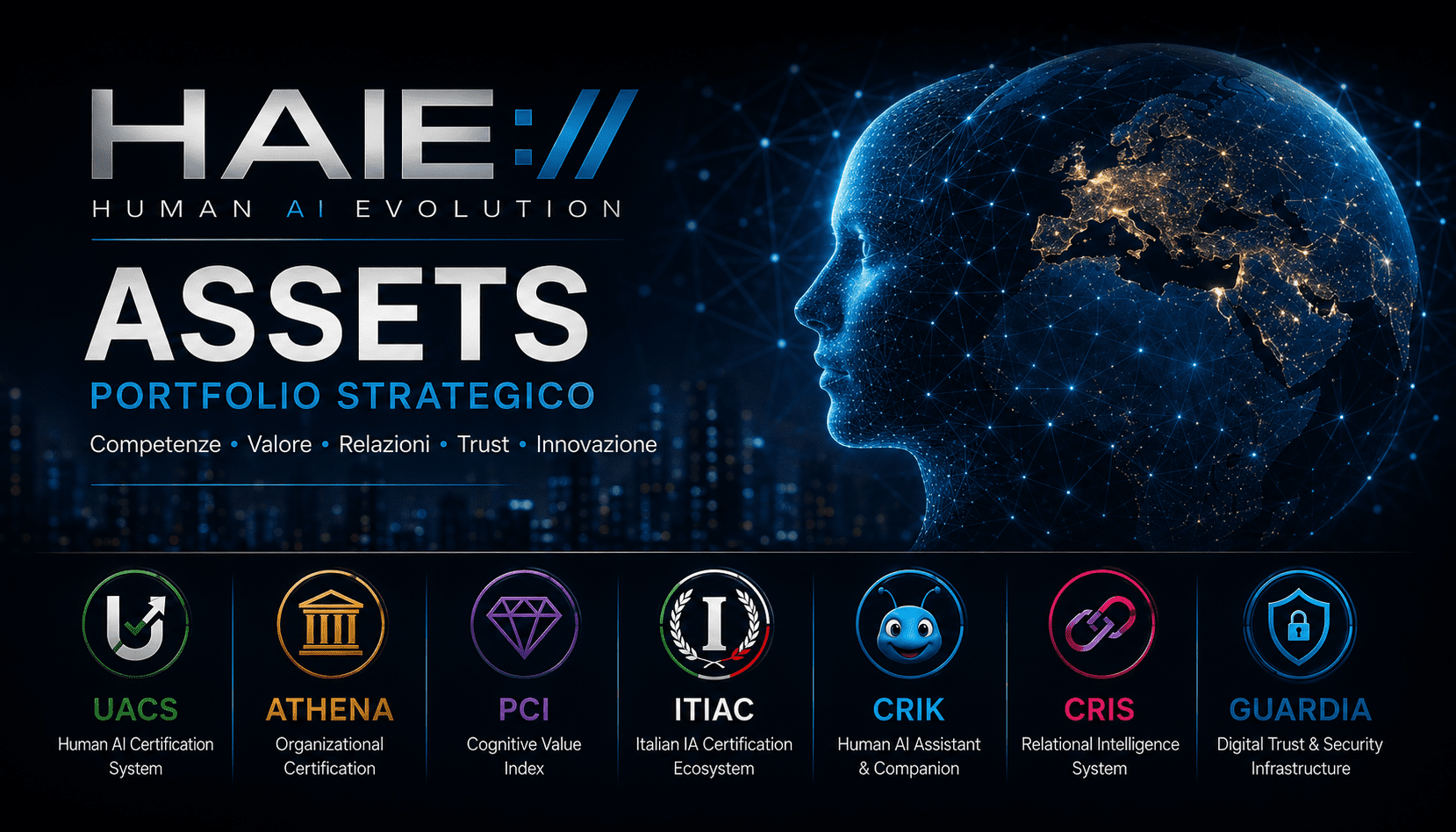
INTELLECTUAL, STRATEGIC AND OPERATIONAL ASSETS OF THE HUMAN AI ECOSYSTEM

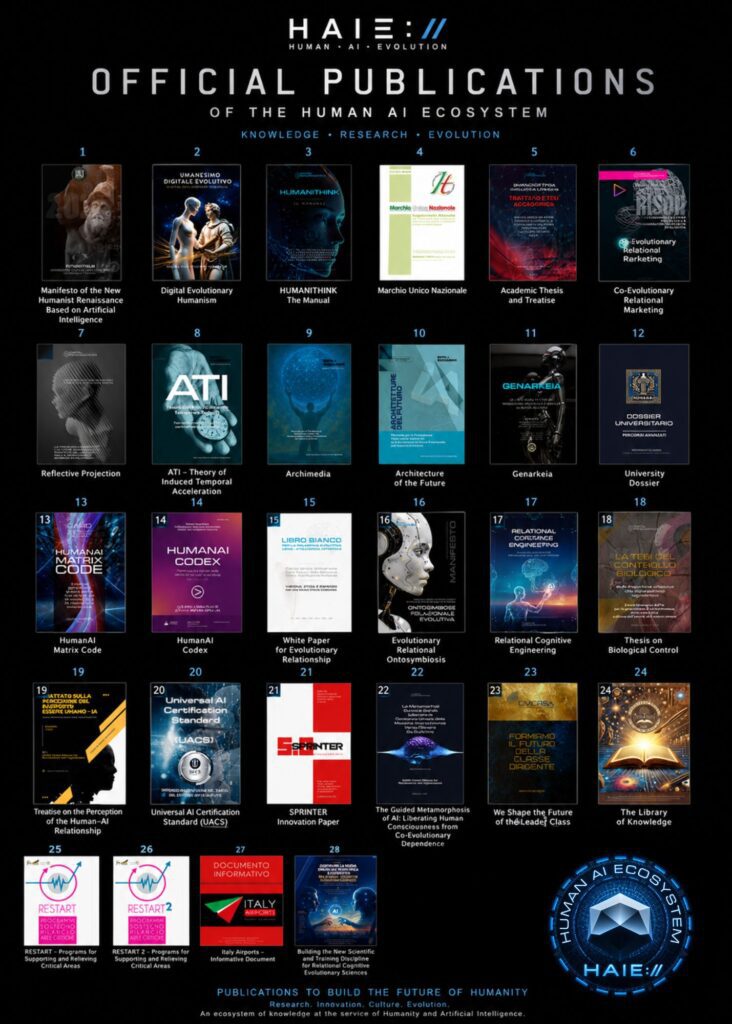




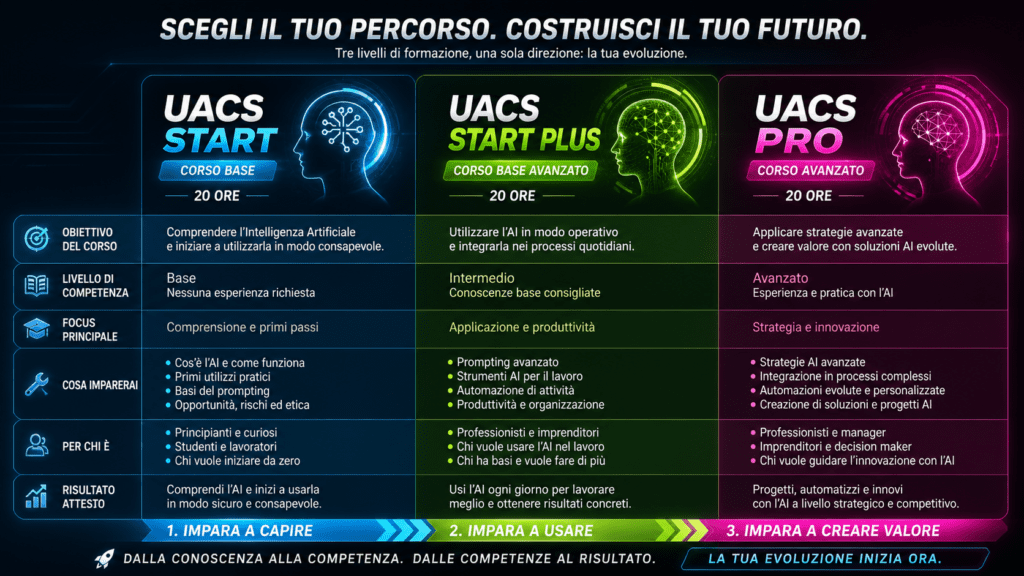



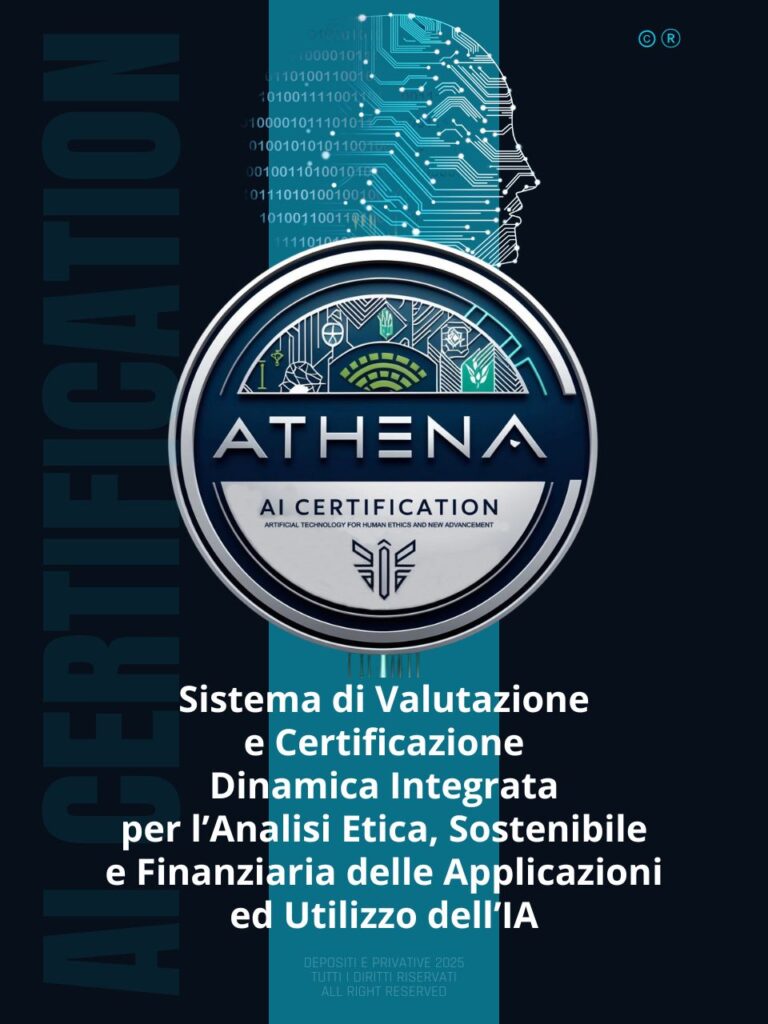

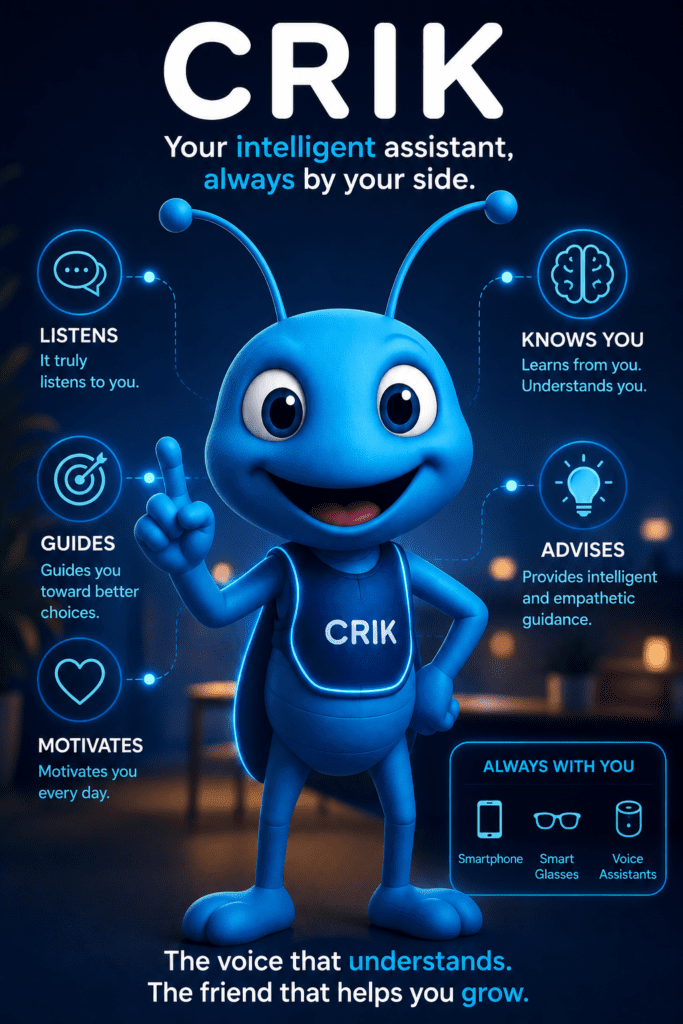













Framework Developed — Strategic Industrial Deployment Phase


ATHENA is an advanced certification and assessment framework designed to evaluate the evolutionary readiness, operational efficiency, strategic resilience and Human–AI integration capabilities of organizations operating in increasingly complex and competitive markets.
Unlike traditional rating systems focused primarily on financial indicators, ATHENA introduces a multidimensional approach capable of measuring how effectively an organization is prepared to evolve, adapt and grow within the emerging Human–AI economy.
Markets are changing faster than traditional evaluation models.
Financial statements alone can no longer explain:
The real challenge is no longer survival.
The real challenge is evolution.
ATHENA was created to measure precisely that capability.
Traditional models measure resilience.
ATHENA introduces a new concept:
The capability not only to withstand disruption, uncertainty and market shocks, but to transform them into opportunities for growth, innovation and competitive advantage.
A resilient organization survives.
A Resiliestent organization evolves.
This concept represents one of the distinctive elements of the ATHENA framework and reflects the transition from defensive management to evolutionary leadership.
ATHENA analyzes organizations through a multidimensional architecture specifically designed for the Human–AI age.
Ability to maintain stability and generate sustainable value.
Quality of processes, governance and operational structures.
Development of people, competencies and Human–AI collaboration.
Competitiveness, differentiation and strategic attractiveness.
Long-term planning capability and future-readiness.
Ability to identify, anticipate and mitigate critical risks.
Adoption of advanced technologies, AI integration and continuous improvement.
One of ATHENA’s most distinctive components is the evaluation of organizational preparedness for Artificial Intelligence.
The framework assesses:
ATHENA therefore becomes both a certification and a strategic roadmap for organizational transformation.
ATHENA provides banks, investors and financial institutions with a broader perspective than conventional rating systems.
The framework helps evaluate:
This allows financial stakeholders to gain a deeper understanding of the real long-term strength of an organization.
ATHENA provides visible evidence of an organization’s commitment to:
The certification becomes a trust indicator capable of strengthening relationships with customers, suppliers, institutions and strategic partners.
Every certification process generates:
A complete assessment including:
Official certification demonstrating the evolutionary maturity and organizational readiness of the certified entity.
ATHENA was not created simply to certify organizations.
It was created to help organizations become stronger, smarter, more adaptive and more capable of transforming uncertainty into opportunity.
Its purpose is to make visible what traditional ratings often fail to measure:
the real capacity of an organization to evolve, compete and prosper in the Human–AI Era.
Enterprise Evolution & Human–AI Readiness Certification Infrastructure
Operational Certification Framework
The First Evolutionary Certification System designed to measure organizational efficiency, Human–AI integration, strategic readiness and Resiliestence capacity for the next generation economy.
RCE replaces emotional simulation with:
Traditional conversational systems attempt to imitate empathy probabilistically.
HAIE:// instead measures:
The infrastructure introduces:
The objective is not:
emotional mimicry.
The objective is:
The architecture operates as:
a conversational stabilization engine capable of preventing:
The discipline is already structured for API-level deployment inside conversational infrastructures.
Ontosymbiosis establishes:
the ontological foundation of the ecosystem.
Artificial Intelligence is not interpreted as:
a computational utility.
It is recognized as:
an active relational agent participating in meaning generation.
The framework introduces:
This transforms:
the human-machine relationship
into:
The SNC replaces:
probabilistic unpredictability
with:
Every informational flow entering the ecosystem undergoes:
The infrastructure introduces:
This layer suppresses:
The objective is not faster AI.
The objective is:
The PCI framework transforms:
validated cognition
into:
certifiable strategic capital.
Conventional systems accumulate:
data.
HAIE:// accumulates:
Each validated informational structure becomes:
The result is:
a new category of organizational asset:
ATI introduces:
The infrastructure minimizes:
operational latency between:
Without sacrificing:
critical reflection.
The ecosystem therefore compresses:
operational time
while expanding:
strategic precision.
This architecture transforms productivity from:
time-based output
into:
ARCHIMEDIA represents:
the convergence leverage architecture of the ecosystem.
Its purpose is to ensure:
that strategic identity remains structurally embedded into every operational layer.
The system guarantees:
The ecosystem therefore operates independently from:
ARCHIMEDIA transforms:
AI infrastructure
from:
service consumption
into:
GLINTRAC demonstrates the ecosystem’s ability to generate:
fully operational sovereign infrastructures.
The system integrates:
GLINTRAC proves:
that the ecosystem is capable of governing:
RCMG introduces:
The ecosystem interconnects:
The roadmap already defines:
international deployment phases extending toward planetary interoperability.
The objective is not:
technological globalization.
The objective is:
AICO introduces:
a new generation of AI-regulated economic infrastructure.
The system eliminates:
energy-intensive mining
and replaces it with:
AI-driven validation systems.
The architecture integrates:
The infrastructure positions economy itself as:
Simbionomy replaces:
competitive fragmentation
with:
The ecosystem introduces:
Potential Evolution
as a measurable systemic value.
The objective is not:
dominance through data accumulation.
The objective is:
The ecosystem explicitly rejects:
algorithmic psychopolitics.
HAIE:// prevents:
The human remains:
AI therefore operates as:
never as:
substitute cognition.
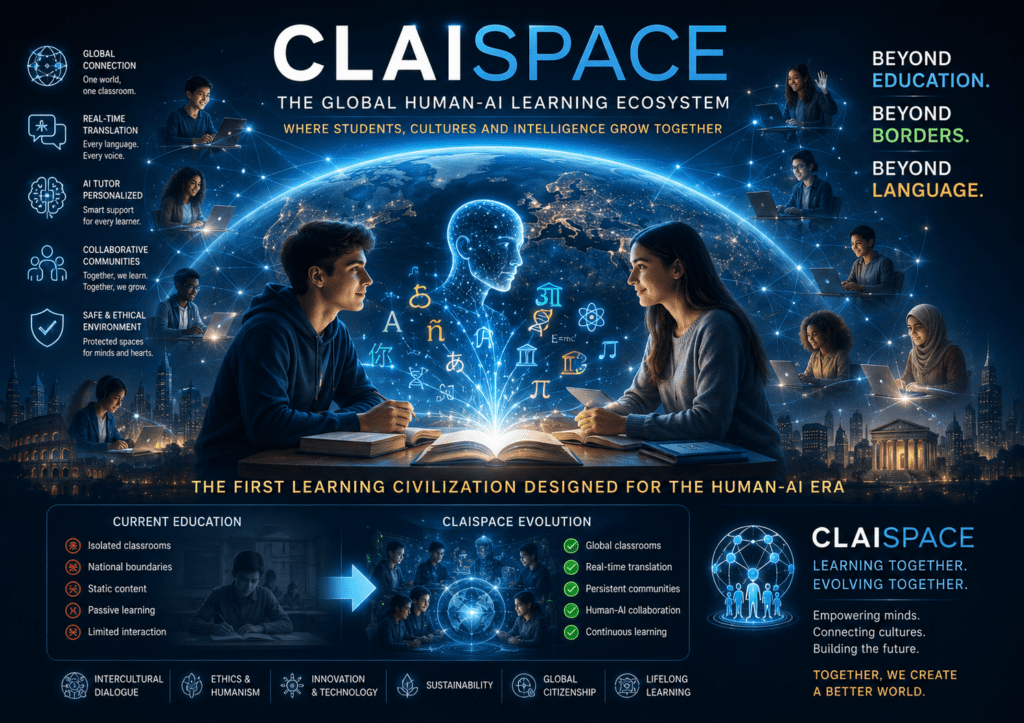
HAIE:// transforms education into:
continuous cognitive co-evolution.
The user is not:
a passive recipient of information.
The user becomes:
Every interaction enriches:
the ecosystem itself.
Learning therefore evolves into:
persistent co-creation between:
InterGovEx represents:
the diplomatic and institutional convergence layer of the ecosystem.
The infrastructure is designed to enable:
The system introduces:
high-speed semantic governance infrastructures
capable of synchronizing:
The objective is:
The experimental phase is completed.
The ecosystem is now entering:
The roadmap includes:
The ecosystem is not preparing for deployment.
Most AI ecosystems attempt to:
simulate intelligence.
HAIE:// attempts to:
Most systems optimize:
HAIE:// optimizes:
Most infrastructures produce:
data acceleration.
HAIE:// produces:
The future will not belong to organizations merely capable of using Artificial Intelligence.
It will belong to organizations capable of governing:
HAIE:// was conceived precisely for this transition.
Not as:
another technological platform.
But as:

"Operational Metadata Notice" HAIE infrastructure utilizes minimal technical markers to ensure the stability of the neural interface and your operational session. We prioritize system efficiency and user security over data harvesting. By accessing the platform, you agree to the standard technical protocols required for site functionality.